What to Expect
- Get introduced to core diving concepts and gear basics
- Practice guided skills and build comfort moving underwater
- Reflect on your progress and consider your next diving steps
Volcano Dive
VolcanoDive is a small, family-run dive school and dive club in Feldbach. Training stays personal and flexible so every diver gets the attention and pace they need.
Mc dive
MC Dive specializes in personalized PADI training for divers of all experience levels – from beginners to advanced professionals. With small groups, flexible course locations, and a focus on safety and quality.
TSZ Copacabana
TSZ Copacabana is a full-service dive center near Graz offering courses, equipment, and its own dive base. With over 40 years of diving experience, we support beginners and professionals alike.
Big Blue - Dive Academy
Big Blue is a dive school and dive club in Graz offering professional training and exploration for all experience levels. With over 20 years of experience, we guide divers to vibrant reefs, mysterious caves, and underwa…
A scuba diving course gives you a structured way to learn the basics of breathing, moving, and staying comfortable underwater. Instead of guessing how diving works, you get guided steps that build your skills from the ground up, whether you have never touched a tank before or want to brush up on techniques you learned a while ago.
Diving is one of those activities that sounds exciting but can feel intimidating at first. That is exactly why a structured scuba diving course exists: to turn curiosity into confidence. You start with the fundamentals, get comfortable with the gear, and slowly build the skills that let you relax and enjoy the underwater environment instead of worrying about the mechanics of it.
This kind of course tends to suit people who have always been curious about diving but never had a clear starting point. It can also be a good fit if you are preparing for a diving-focused trip or vacation and want to feel ready before you get in the water. Some people take a scuba diving course simply because they want a new skill that combines physical activity with calm focus and a sense of discovery.
You do not need previous diving experience to consider a beginner-friendly course. Many courses are structured specifically to introduce people to the sport from scratch, building comfort and confidence gradually rather than assuming prior knowledge.
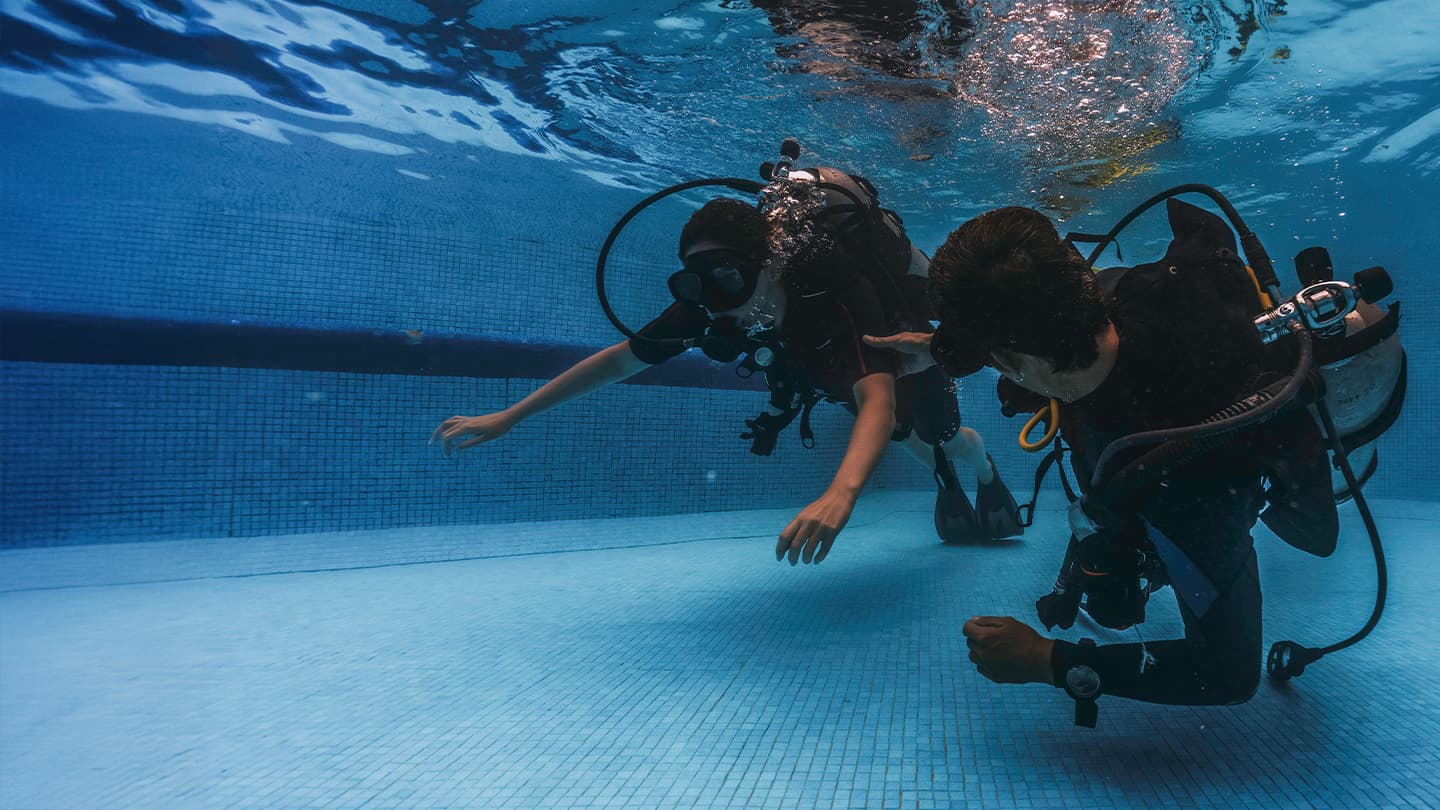
A typical scuba diving course combines learning the basics of equipment and safety concepts with hands-on practice. You can expect a progression that starts with orientation and foundational knowledge, moves into guided practice, and builds toward more independent comfort in the water. The exact structure, including whether sessions happen in a pool, confined water, or open water, can vary, so it helps to check the specific course format before booking.
Many courses are built around helping you feel steady with your gear, understand basic safety concepts, and get familiar with underwater communication and movement. The goal is generally to help you leave with a stronger sense of what diving involves and whether you want to continue further, such as pursuing an open water certification.
When comparing scuba diving courses, it helps to think about what you want out of it. Are you looking for a first taste of diving to see if you enjoy it, or are you aiming for a recognized certification that lets you dive independently afterward? Some courses are introductory in nature, while others are structured toward a formal open water certification. Knowing your goal can help you pick the right format.
It is also worth thinking about your comfort level in water generally, since that can shape how quickly you settle into the training. A beginner scuba diving course is often designed with this in mind, pacing the learning so newcomers do not feel rushed.
Before booking a scuba diving course, check the listing details for information such as course duration, certification type, group size, required swimming ability, age guidance, and what equipment is included. It also helps to confirm whether the course takes place in a pool, confined water, or open water setting, and whether any medical or fitness declarations are required beforehand.
Learning to scuba dive opens up a different way of experiencing the world, one where you move slowly, breathe deliberately, and see landscapes that are usually hidden beneath the surface. A structured course gives you a supported way to explore that, without having to figure it out alone. Whether you are testing the waters with a discovery-style session or working toward a full certification, a scuba diving course offers a clear path forward for anyone curious about the sport.
Most beginner scuba diving courses are designed for people with no previous diving experience. They typically start with the basics and build up gradually, so check the course details to confirm the exact starting level expected.
A discovery-style session is usually a shorter introduction to diving, while a certification course is more structured and often leads to a recognized qualification. Check the listing details to see which format applies to a specific course.
Swimming ability requirements can vary between courses, so this is worth checking in the booking details before you sign up. Some courses list specific swimming or comfort-in-water guidance as part of their requirements.
A first lesson generally introduces you to the equipment, basic safety concepts, and guided practice, often starting in calmer or shallower water. The exact structure can differ, so check the course details for specifics on format and setting.
A scuba diving course can make a memorable gift for someone curious about trying something new or preparing for a diving-focused trip. Check the listing for gifting or voucher options if you are considering it as a present.
If you are curious about diving but have never tried it, a beginner-focused course is generally designed to ease you in with foundational skills and guided practice. Reviewing the course description can help confirm whether the pacing and format suit you.
Equipment details can vary by provider and course type, so it is best to check the booking details for a full list of what is included, such as tanks, masks, or wetsuits, before your session.
Many people take a scuba diving course specifically to feel more confident ahead of a diving-focused vacation. Building foundational skills beforehand can help you feel more prepared once you arrive at your destination.
Use the available search filters and listing details to compare courses by location, format, and timing. This can help you find an option that matches your schedule and preferred setting, whether pool-based or open water.
Completing a certification course may allow you to continue diving independently or pursue further training, depending on the course type. Check the specific course listing to understand what completion includes and what comes next.